
Why becoming a parent can bring up all of our old stuff… and usher us towards a greater depth of healing.
You think you’ve worked through it all…
There’s an interesting (and, for those experiencing it, perplexing and frustrating) phenomenon that can occur during the perinatal period.
You may have been to years of therapy, done lots of self work, or feel that you have worked through childhood wounds. You may have come to a place of relative peace or acceptance in your complex relationships with family members, culture, or upbringing. You may even feel that you have a pretty solid grasp of how your “child” or “wounded” parts show up in your intimate relationships, and that you have found ways to work with them compassionately and effectively when they arise.
And then, you get pregnant, go through fertility struggles, or have a baby, and all of a sudden, relationships feel as though they are taking a back slide, old insecurities are rearing their heads, or prior dynamics or feelings are coming up with new intensity, or a different flavor.
What gives?
Humans are a deeply symbolic species - we do not need to be experiencing something directly, or in the moment, for it to bring up memories, feelings, and deeply held beliefs. Think about a song that you listened to a lot during a deeply emotional time - a breakup, a big transition, or a loss. When you listen to that song, years (or even decades!) later, feelings and memories of that time can come flooding back with dramatic and unexpected intensity.
Movies, art, and language are all symbolic avenues for us to tap into and express unconscious or subconscious feelings, memories, and experiences. But other things can also act as symbols - in this case, the very experience of your own or someone you love’s, pregnancy and birth, (as well as babies themselves!), can act as representative stand-ins for past experiences, deeply held beliefs, and old relationship dynamics, bringing us back to our childhoods, early parenthoods, or times of grief or loss.
““The people we love and those who raised us live inside us; we experience their emotional pain, we dream their memories, we know what was not explicitly conveyed to us, and these things shape our lives in ways that we don’t always understand.””
Ghosts in the Nursery
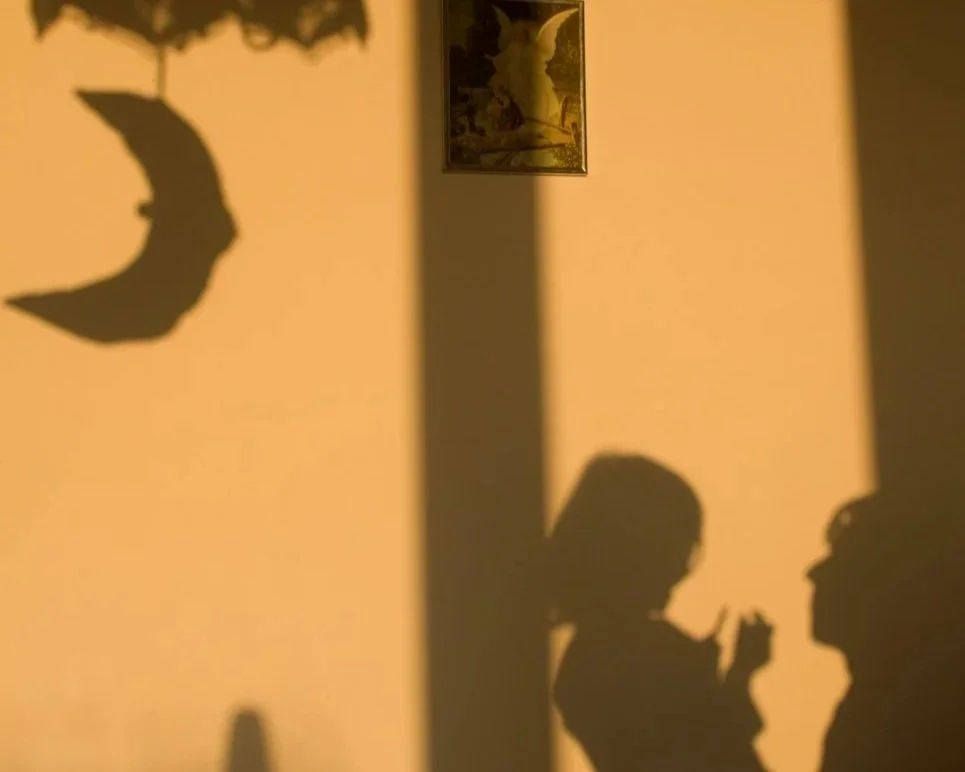
Psychoanalyst Selma Friagberg referred to this phenomenon in her seminal piece of the same name, as “Ghosts in the Nursery.” The intensity of the perinatal period is ripe with possibility for these “ghosts” or unconscious experiences and beliefs, to arise in our bodies and minds.
These ghosts may appear as deep anxieties, feelings of depression, self-criticism or feeling not good enough, existential worries, fears of abandonment, overwhelm, loneliness, paranoia, self-isolation or resentment, or even dreams, that may feel “bigger” than, or not totally connected to what is happening in the current moment. Often, when my clients say things like, “I know I shouldn’t feel this way,” “I don’t know why this feels so hard,” “Is this this hard for everyone?” I get curious about the unconscious parts of their experience that may be getting stirred up.
Some good news.
While it can be incredibly overwhelming, especially when running on fumes (to put it lightly), all of this unconscious material can also be incredible fodder for growth. The vulnerability and intensity of the perinatal time can push us over the edge of our comfort zone, forcing us to reckon with the unique ghosts we carry.
If for most of our lives, we functioned in a state of people-pleasing, attempting to make sure that everyone else is taken care of before ourselves, the full-on nature of fertility, pregnancy and the new-born stage necessitates that we reconsider ourselves and our needs. If previously it felt like productivity was the standard for self-worth, reckoning with the vulnerability of our bodies, or living life in baby time can throw us into the deep end of learning how to value ourselves and life for more than how much we can do. If our unconscious belief was that we need to be perfect in order to be loved, a baby will teach us both that perfection is absolutely impossible, and that we will still be loved to the moon and back.
Where to go from here?
Sometimes it can be hard to see the forest for the trees. When we are so deep in the chaos and demands of the perinatal period, it may feel hard for us to untangle the “what” from the “why.” Therapy, especially with a perinatal, psychodynamic, or parts work therapist, can help us get curious about our experience with compassion, and support us in re-learning how to care for the painful parts of ourselves that arise. With some fresh eyes, we may come to find that our ghosts are actually protective “angels” who are just trying to protect us from getting hurt. We can begin to relate to these parts of ourselves with greater compassion, less self-judgement and control, and with more “self-leadership.”
And the best part is that learning how to have a caring and respectful relationship with all of our different internal feelings and experiences can allow be there as our children navigate the ups, downs, intensities, mundanities, pleasures, pains of their inevitable vicissitudes of life in turn.
If you are seeking parenting therapy or perinatal therapy in Colorado to better understanding how your own unique history may be shaping your experience, I would love to support you on this journey.
Connie Roberts is a licensed therapist (LCSW) in Colorado specializing in perinatal mental health, parenting, trauma, CPTSD, couples counseling, and body image. She works with clients using psychodynamic therapy, somatic approaches, EMDR and IFS / parts work.